

Some interview questions test what you know. Others reveal how you think when you don’t have all the answers.
Consider this question: “Tell me about a time you had to make an important decision without having all the information you needed.”
For a senior professional, this is a familiar leadership challenge. Business decisions rarely come with complete information, unlimited time or a guarantee that things will work out.
So what does an interviewer look for in your answer? Not just the decision you made, but how you assessed the situation, weighed the risks, took responsibility and dealt with the outcome.
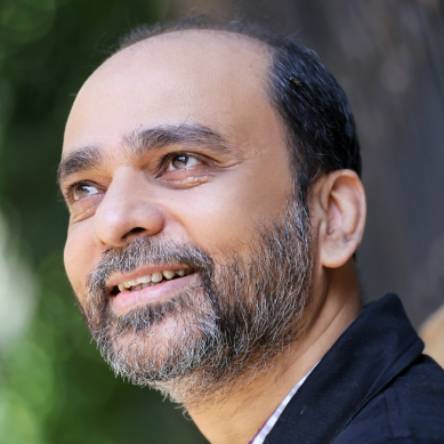
This came through strongly in my conversation with Marcel Parker, who brings five decades plus of experience in HR leadership, recruitment and leadership coaching.
One of his observations stayed with me: leaders today are increasingly expected to deal with uncertainty and solve problems rather than simply talk about what they have achieved.
For experienced professionals, this has an important implication.
Your experience may get you into the interview. What that experience has taught you can influence whether you get the job.
Why failure can reveal more than success
Marcel also shared a question he likes to ask candidates: “Tell me about a time you failed.”
While this is a different question, it reveals another important dimension of leadership. When a decision doesn’t produce the expected result, can you recognise what went wrong, take responsibility for your part and learn from the experience?
The instinct, however, is often to protect ourselves. We explain the circumstances, the market, the constraints or the decisions made by others.
Some of these factors may be legitimate. But if the answer becomes an exercise in explaining why we were not responsible, the interviewer learns very little about our ability to lead.
Marcel’s observation was that the tendency to blame others can be revealing.
Accountability does not mean accepting blame for everything. It means recognising your own contribution, even when several factors influenced the outcome.
For a senior professional, that ability matters. Leadership is not about getting every decision right. It is about exercising judgement, taking responsibility and learning when things don’t go as planned.
Marcel shared another question that I found particularly interesting:
“How would your wife describe you?”
His reasoning was revealing. A close personal relationship can offer a perspective that a professional setting may not. At home, we are often less guarded. The people closest to us may see how we react when things go wrong, handle disagreements and respond to pressure.
Does the person become defensive when challenged? Can they acknowledge a mistake? Do they listen when someone disagrees with them? Can they remain composed when things do not go according to plan?
These behaviours matter because uncertainty tests not just our technical competence, but also our judgement, temperament and relationships.
Of course, no single person’s description can provide a complete assessment of a leader. But the question invites us to reflect on something important:
Who are you when you cannot control the situation or carefully manage the impression you create?
What does handling uncertainty actually require?
When I think about what experienced professionals need to demonstrate in interviews, five qualities stand out.
1. Judgement without complete information
Can you assess the risks, weigh competing priorities and make a decision when you don’t have all the answers? Don’t just claim to be comfortable with uncertainty. Describe a situation in which you had to make a difficult call.
2. Ownership without defensiveness
When things go wrong, can you recognise what you could have done differently? Strong leaders distinguish between circumstances beyond their control and the choices for which they were responsible.
3. Adaptability when plans change
Can you recognise when your approach is no longer working, reconsider your assumptions and change direction?
4. The ability to maintain confidence
A leader doesn’t need to pretend to know everything. The challenge is to acknowledge what remains unclear while giving the team enough direction to move forward.
5. The ability to learn and change
Experience alone does not guarantee better judgement. You can spend twenty years making the same mistake. What matters is whether an experience changes the way you think, decide or behave.
Together, these qualities reveal not just what a professional knows, but how that person operates when things become difficult.
What does this mean for your next interview?
If you are a mid-career or senior professional, look beyond preparing a list of achievements.
Think of a time when you had to make a difficult decision without having all the information you needed. Also think of a situation where things did not go as planned.
Ask yourself:
- What made the situation difficult or uncertain?
- What information did I have, and what was missing?
- What decision did I make, and why?
- What was my responsibility in the outcome?
- What did I learn, and what did I subsequently do differently?
Your answer does not have to portray you as someone who never makes mistakes. Trying to appear perfect can make an answer less credible.
What you need to demonstrate is that you can think clearly, take responsibility and learn from experience.
This is where many experienced candidates miss an opportunity. They describe the situation in considerable detail but spend too little time explaining their own judgement and actions. The interviewer understands what happened, but not necessarily how the candidate thinks.
Remember, the purpose of an interview is not simply to recount your career. It is to help the interviewer assess how you are likely to perform in the role ahead.
That requires you to make your thinking visible.
The real measure of experience
Knowledge remains important. But senior appointments require something more: the judgement to interpret information, the courage to make decisions and the self-awareness to recognise when we need to change course.
Marcel’s observations reinforced an important lesson for me: leadership is revealed not only in the outcomes we celebrate, but also in the decisions we make, the responsibility we accept and the lessons we carry forward.
Your resume tells an interviewer what you have done. The way you discuss your experiences can reveal how you think, how you lead and what you have learnt along the way.
And when there is no right answer, that may be precisely what the interviewer is trying to discover.
In your next interview, don’t just prepare to talk about what you achieved. Prepare to explain how you think.