
A senior professional once told me, “I prepared so much that when the conversation shifted, I didn’t know what to hold on to.”
Preparation is widely praised. And rightly so. But excessive preparation often optimises for coverage rather than clarity.
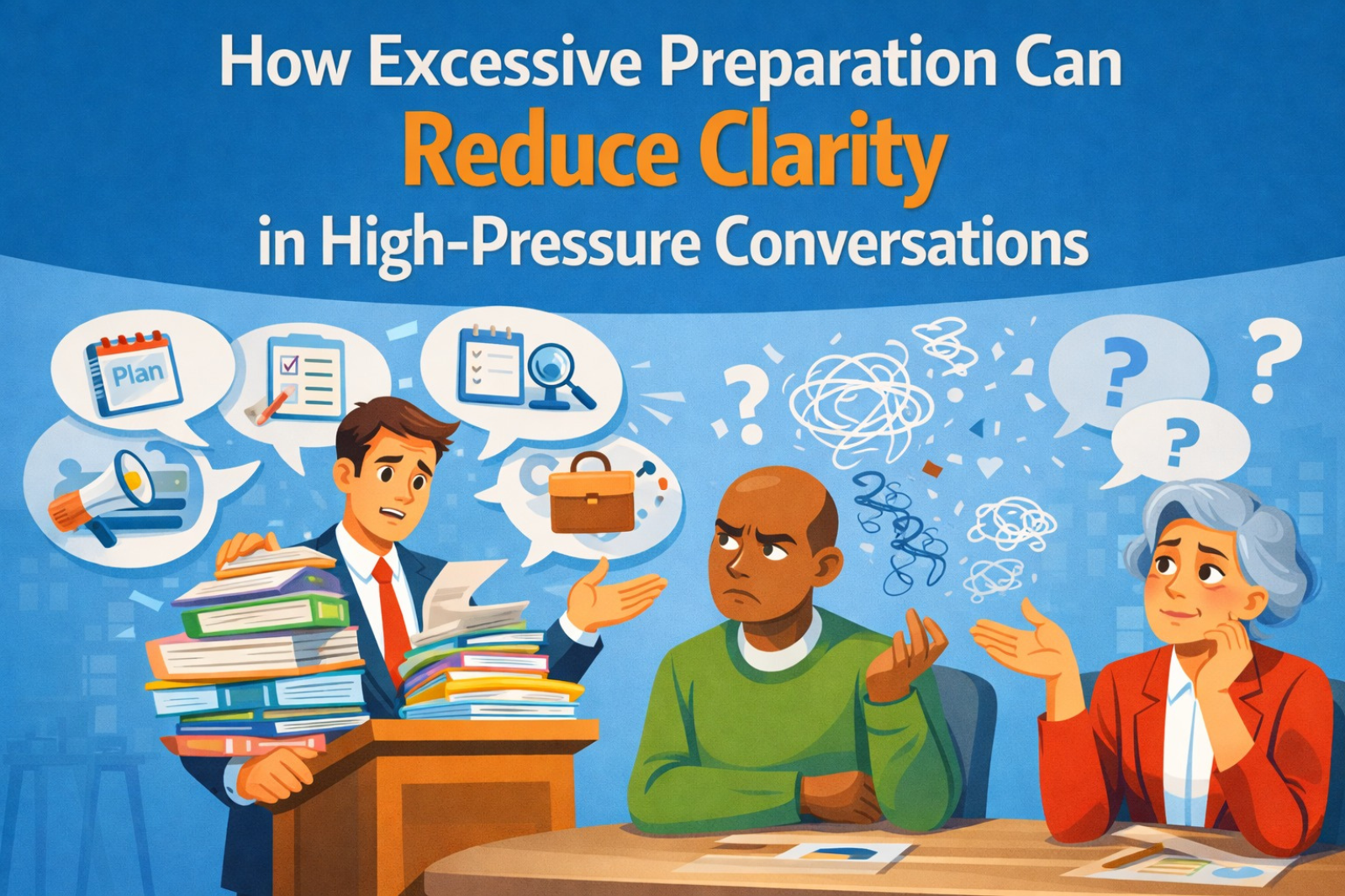
Most professionals prepare by anticipating every possible question, building detailed slides, and rehearsing multiple lines of thought. The intention is control. The unintended effect is cognitive crowding.
High-pressure conversations rarely follow scripts. They shift direction. They interrupt. They challenge assumptions. When too much material competes for attention in the speaker’s mind, clarity becomes fragile.
Instead of responding to what is being asked, the speaker is navigating what they prepared.
This is why over-prepared professionals sometimes struggle when conversations move unexpectedly. The issue is not readiness. It is focus.
Clarity under pressure comes from knowing what matters most, which should define your purpose for the presentation and being willing to let everything else recede.
To my coaching clients, I always advise not to have the entire written script in front of you while presenting. While you may write down your full script but from that you need to develop a blueprint (only pointers of 3 to 5 words for each key point) which you can use only for reference. That keeps your flow smooth and your focus remains on what the audience needs. That is how you build value while delivering your presentation.
Preparation should create anchors, not options. It should sharpen judgment, not multiply talking points.
In high-stakes moments, clarity is not about recalling more. It is about holding on to less, with conviction.
Note: I write regularly about how presentation clarity, communication, and influence shape careers and leadership conversations.If you’d like to read more and get these pieces in your inbox, you can send us your email id to subscribe for the below newsletter:
https://sarabjeetsachar.com/presentation-influence/