
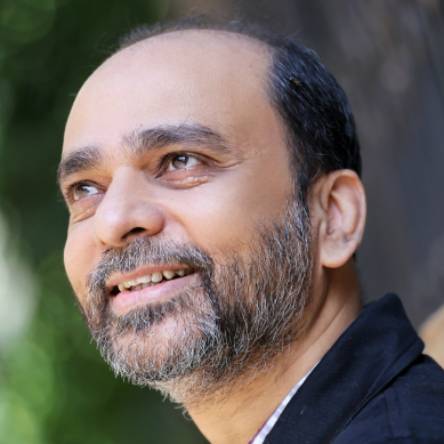

Over the years, I’ve worked with thousands of professionals — from freshers to CXOs — helping them crack interviews for some of the most competitive roles globally. And I can tell you this with confidence: It’s rarely a knowledge problem. It’s almost always a consistency problem.
You’re not stuck because you’re not smart. You’re stuck because you’re exhausted. Overwhelmed. Distracted. And let’s be honest, we live in a world built to keep us that way.
The Illusion of “I’ll Do It Later”
Here’s what I see happen often:
- A candidate decides to start preparing.
- They download 4 guides, follow 3 pages on Instagram and LinkedIn, and sign up for 2 mock platforms.
- They tell themselves, “I’ll start properly tomorrow.”
Then one meeting runs late. Or life happens. And tomorrow turns into next week. In fact, JobSeeker Labs’ 2024 data shows that over 70% of job seekers drop their prep plans within 10 days. Not because they’re lazy but because their prep plan was never designed for real life in the first place.
Let Me Share a Real Story: Shreya (name changed), 29, Marketing Manager
Shreya came to me two weeks before her final interview round at a global tech firm. Here’s what she said on our first call: “I start strong. But then I miss a day, and everything falls apart. I end up binge-watching interview videos instead of practicing.”
Smart, self-aware, but like many, her prep routine was based on guilt and unrealistic expectations. So we stripped it down to the basics.
We worked on:
- Setting a fixed, no-distraction prep time: 8–9 PM.
- Choosing one question a day to go deep into.
- Swapping digital overload with a single physical notebook.
- And ending each session with a 5-minute reflection.
The result? By interview day, she wasn’t “perfect” but she was prepared, calm, and confident. She could think clearly under pressure. And yes — she cracked the offer.
Why Interview Prep Often Fails (Even for High Achievers)
Let’s break it down:
1. Distractions Are Constant
Work, family, phone notifications, and the mental fatigue of modern life don’t leave room for focused, deliberate practice.
Even if you want to prepare, your environment is pushing against you. If you don’t control it, it controls you.
2. We Try to Do Too Much
Many candidates try to prep for 30 questions a week, read 10 blogs, solve 20 problems… and review none of them. The result? Shallow learning. Poor recall. Low confidence. Instead, one strong, well-practiced answer with depth is more valuable than 10 generic ones with gaps.
3. We Prepare Like We’re Studying for an Exam
Interviewing is a performance and not a memory test.
Yet, candidates often over-rely on theory and passive reading instead of active practice. They read about body language, but don’t record themselves. They review questions but never rehearse answers out loud.
When the real thing comes, they blank out, not because they didn’t know the answer, but because they hadn’t practiced delivering it.
What I Tell My Clients: Build a Routine That Respects Real Life
Here’s what works and this comes from experience, not theory:
1. Create a “Prep Slot”, Not a To-Do List
Forget long to-do lists. Instead, block one non-negotiable time slot in your day. 30 to 60 minutes is enough. Even 20 minutes is okay but protect it like you would a meeting with your boss. The goal is to show up, not to be perfect.
2. Focus on Depth, Not Volume
Pick one question a day and go deep:
- Structure your answer.
- Say it out loud.
- Record yourself.
- Improve it the next day.
One powerful answer can often be adapted across multiple interviews.
3. Keep a Single Notebook or Doc
Reduce decision fatigue. One place for all your notes. Your answers. Your mistakes. Your thoughts.
The fewer platforms, the less resistance.
4. End with a Quick Reflection
Before wrapping up, ask:
- What did I do well today?
- What felt hard or confusing?
- What do I want to try differently tomorrow?
These 3 questions will keep your momentum alive.
5. Use Tech But Intentionally
Apps like Anki (for spaced repetition), Notion (for question banks), or even a simple Pomodoro timer can help, if used with discipline.
Don’t let tools become your excuse for avoiding actual prep.
If You’re Feeling Overwhelmed, Start Smaller
You don’t need to do everything. Just do something consistently.
Start with one question a day. One 30-minute block. One notebook.
That’s how prep turns from pressure → into practice → into confidence.
Final Thoughts
If you’ve been beating yourself up for “not preparing enough,” take a deep breath. It’s not about working harder. It’s about working smarter and more sustainably. And if you’ve tried doing it alone and still feel stuck? That’s okay. Sometimes, you need an outside eye. A coach. A mirror. A rhythm. And that’s where I come in.
Best,
Sarabjeet Sachar
Founder & CEO, Aspiration
Career Transition Coach